OCIMA Robots Serving the DTT Tokamak: Italian Engineering at the Frontier of Fusion
Thanks to the Divertor Tokamak Test (DTT)—one of the largest investments in scientific research ever made in Italy—the country is positioning itself at the forefront of the global race toward fusion energy. In this journey, DTT relies on the expertise of some of Italy’s leading industrial, technological, and scientific players. Getting to know these partners means understanding DTT itself—and, more broadly, an Italy that knows how to deliver.
OCIMA S.r.l., founded in 1991 by Raffaele Amico in Caivano, near Naples, is one of these pillars. Specializing in advanced industrial automation and highly complex special-purpose machines, the company has designed and is currently building two remote handling robotic systems—HYRMAN and CMM—intended to operate inside the DTT reactor. We met with Raffaele Amico, CEO of OCIMA, to better understand the company’s contribution.
OCIMA was founded in 1991 as a small subcontract mechanical workshop. How did the transformation into a manufacturer of special machines and robotic systems take place?
The story of OCIMA began on May 13, 1991, when I decided to turn my passion for mechanics into reality by founding what was then a small workshop of three people, myself included. In the early years, we gained experience and refined our skills, but over time it became clear that producing individual parts without a defined function was not enough. We wanted to understand how those parts fit into something larger and more meaningful. That’s where the turning point came.
We decided to become manufacturers of special machines and robotic systems.
A change in perspective…
Absolutely. It was an ambitious choice: transforming each component from a simple mechanical part into an element of a complex system with real added value. That decision triggered growth that has never stopped.
How did you manage this evolution, and what role does investment in human capital play?
We grew organically, focusing on quality before quantity. Investment in people has been fundamental—our staff is our most important asset.
Including training?
Of course. Continuous training and updating are strategic investments. The challenges we face require not only technical expertise but also constant adaptability and innovation.
Today OCIMA employs more than thirty people, with skills ranging from mechanical design to electronics and software.
Exactly. Our team includes nine mechanical designers, eight electronics engineers and software developers, twelve operators and technicians, and three administrative staff. OCIMA—an anagram of my surname—reflects this identity: a company shaped by the character and passion of its founder, constantly seeking solutions that do not yet exist on the market.
Physical growth as well?
Certainly. In 2008 we opened a new facility: 12,000 square meters in total, including 1,700 for production and assembly, 1,100 for offices, and 250 for laboratories.
Let’s talk about the collaboration with ENEA for DTT. How did it begin?
It was a challenge we embraced with enthusiasm and full awareness of its complexity. ENEA involved us in a supply contract for the design and construction of two robotic systems—HYRMAN and CMM—for remote handling operations inside the DTT reactor.
It represented a major leap forward, as fusion imposes technical requirements far beyond conventional industrial automation. But that’s exactly the kind of challenge that drives growth.
Can you explain HYRMAN and CMM in simple terms?
Inside a fusion reactor like DTT, components interfacing directly with plasma become radioactive over time and must be replaced. Human access is impossible—this is where remote handling systems come in.
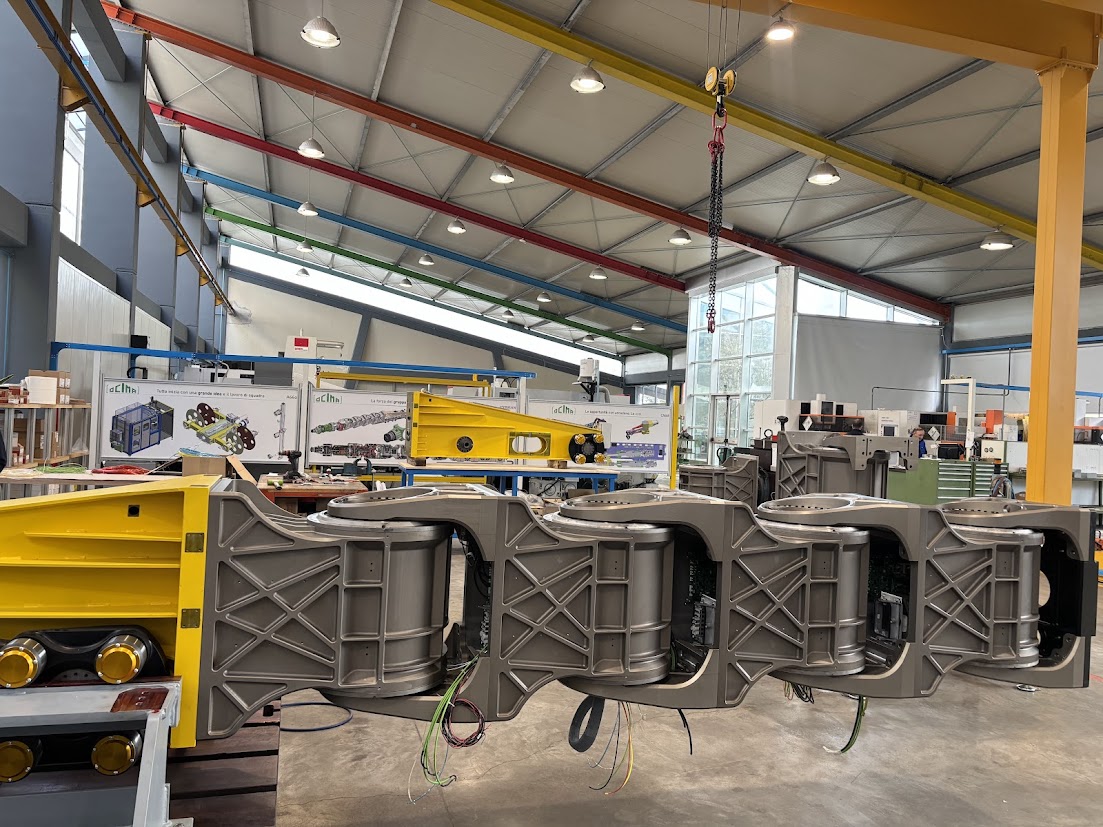
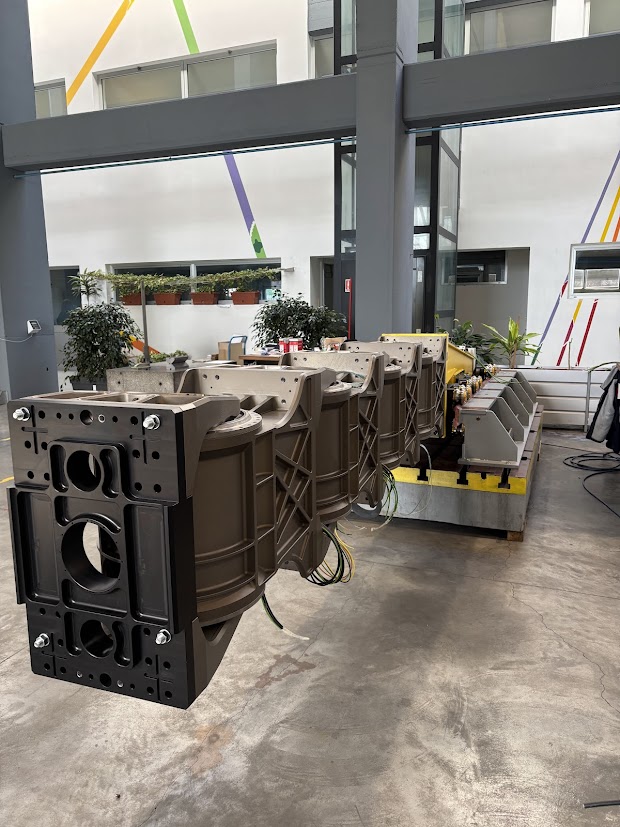
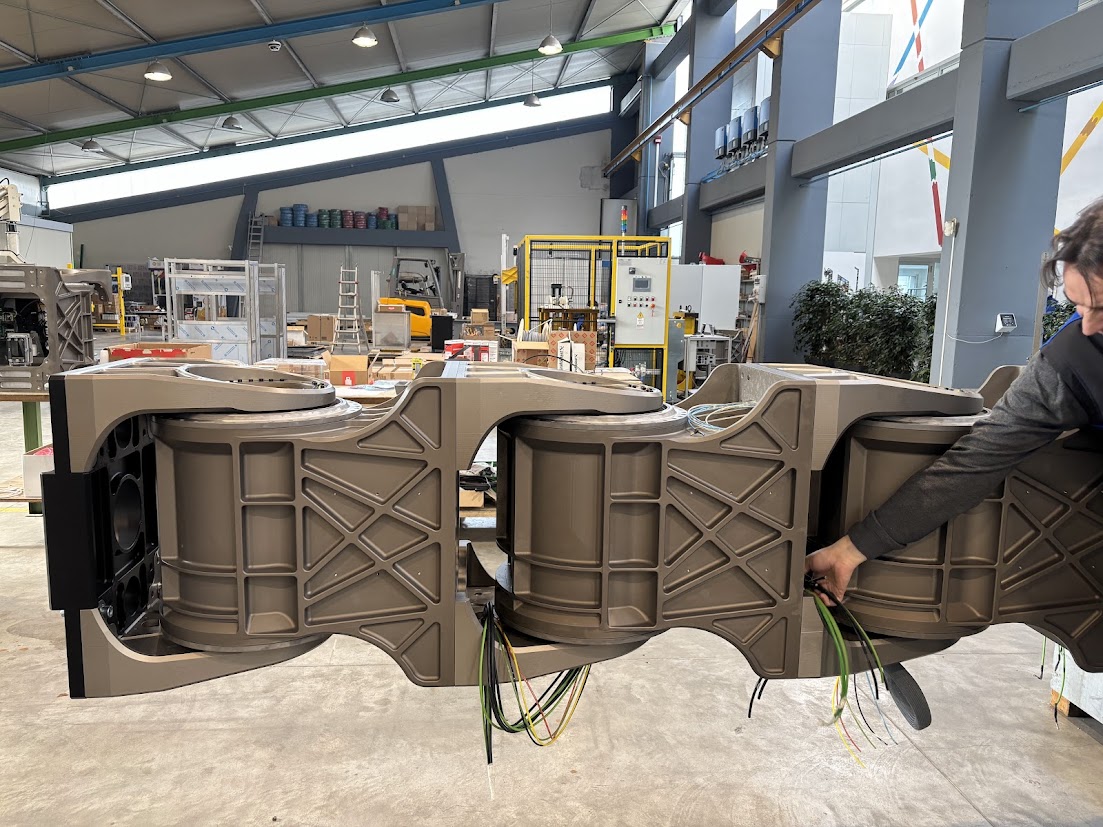
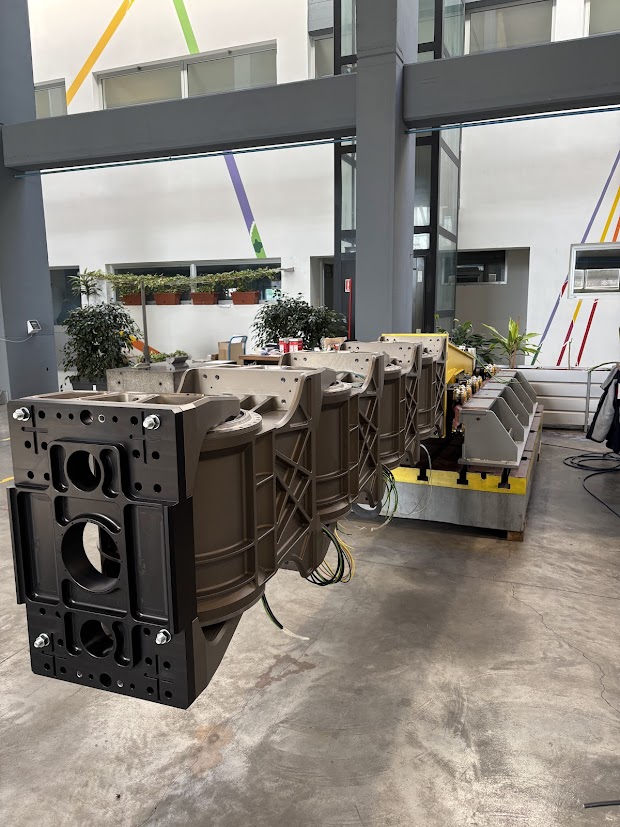
HYRMAN (Hyper Redundant Manipulator) is a robotic arm with 12 degrees of freedom, designed to operate in tight spaces within the vacuum vessel. It can handle loads up to 350 kg with sub-millimeter precision and replace first wall modules.
CMM (Cassette Multifunctional Mover) is designed to install and replace divertor cassettes—steel components weighing up to 400 kg.Both systems operate under extreme conditions, featuring full high-vacuum compatibility and very high reliability requirements, even though remote handling tasks are performed in vented conditions
What were the main engineering challenges?
Lubrication was a major one: in high vacuum, conventional oils cannot be used. We adopted special greases, solid lubrication, and sealed systems with pressure monitoring.
Another key challenge was redundancy and fault tolerance. Since human intervention is impossible, the system must remain operable even in degraded conditions. We implemented multi-level redundancy: dual position feedback, redundant motors, redundant communication buses, and distributed control electronics.
HYRMAN’s control architecture is described as advanced. How does it work?
With 12 degrees of freedom, there are infinite ways to reach a position. The control software must calculate the optimal configuration in real time, considering obstacles, structural constraints, and dynamic loads.
It continuously monitors sensors, lubrication parameters, force, torque, and auxiliary signals. Dedicated servo drives are connected via real-time fieldbus to the central controller. This required developing entirely new algorithms in close collaboration with ENEA.
Will this experience impact OCIMA’s future?
Absolutely. The solutions developed—vacuum-compatible mechanics, redundancy architectures, and advanced control algorithms—will become part of our technological heritage.
Does OCIMA’s experience say something broader?
Yes. It shows that Italian industry is fully capable of tackling the world’s most advanced technological challenges. OCIMA is an SME, not a multinational—yet we are designing robots for one of Europe’s most important fusion reactors. Passion, expertise, and ambition have no minimum size. Italy, when it believes in itself, can rise to any challenge.